
What Is Biological Age?
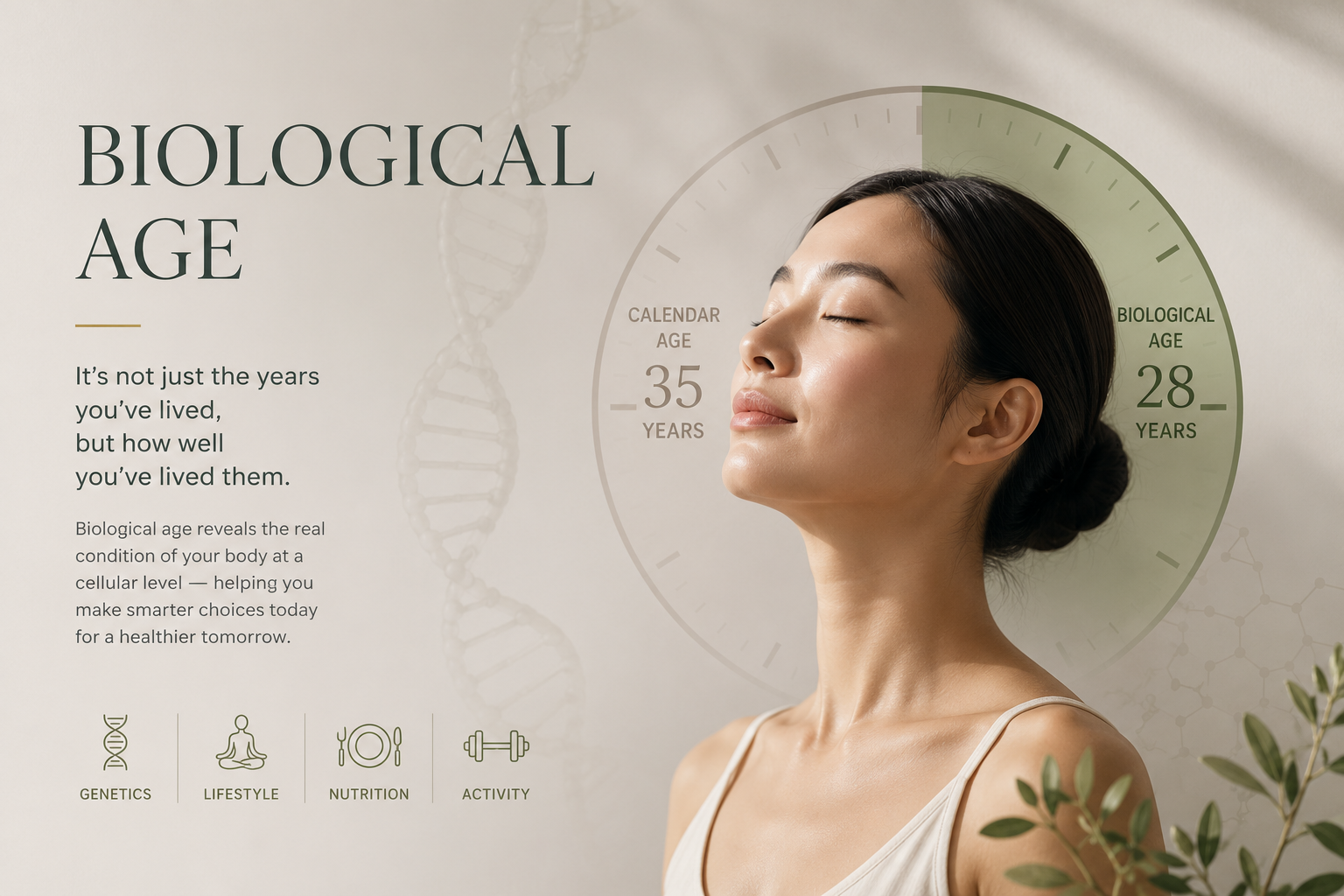
Chronological age refers to the number of years you have lived. Biological age reflects how your body is functioning compared with others of the same chronological age.
Biological aging is influenced by many factors, including genetics, lifestyle, nutrition, physical activity, sleep, stress, environmental exposures, and metabolic health.
While chronological age moves forward at the same pace for everyone, biological aging can vary significantly between individuals.
What Is Biological Age Testing?
Biological age testing uses advanced biomarkers and scientific algorithms to estimate aspects of aging that may not be captured by chronological age alone.
Depending on the test, assessments may analyze factors such as:
- DNA methylation patterns (epigenetic markers)
- Metabolic health indicators
- Inflammation-related markers
- Cardiovascular risk factors
- Lifestyle and wellness data
These insights may help provide a broader picture of current health status and areas that may benefit from attention.
Why Measure Biological Age?
Understanding biological age may help individuals:
- Establish a baseline for their current health status
- Track changes over time
- Identify areas for lifestyle improvement
- Personalize wellness strategies
- Monitor progress as part of a longevity program
The goal is not simply to achieve a lower biological age, but to better understand factors that influence long-term health and vitality.
Who May Consider Biological Age Testing?
Biological age testing may be valuable for individuals who are interested in:
- Preventive health and longevity
- Optimizing lifestyle decisions
- Tracking wellness progress
- Understanding aging patterns
- Creating a more personalized health strategy
It may be particularly relevant for individuals who want measurable insights rather than relying only on how they feel.
How Does Biological Age Testing Fit Into Longevity Medicine?
Biological age testing is one piece of a larger longevity framework. Results may be considered alongside:
- Comprehensive health assessments
- Laboratory testing
- Nutrition and exercise strategies
- Sleep optimization
- Stress management
- Personalized wellness interventions
No single test can fully measure health or predict the future. Instead, biological age testing can provide additional information to guide thoughtful, individualized decisions.
คำถามที่พบบ่อย
Does biological age testing predict how long I will live?
No. Biological age tests do not predict lifespan with certainty. They provide estimates based on specific biological markers associated with aging.
Can biological age change?
Biological age measurements may change over time as health factors, lifestyle habits, and biological processes change. However, results should be interpreted within the context of the specific testing method used.
Is a younger biological age always better?
A biological age result is one health indicator, not a complete measure of wellness. It should be considered alongside overall health, medical history, and lifestyle factors.
A More Personalized View of Aging
Modern longevity medicine is moving toward a more individualized understanding of health—one that considers not only how old we are, but how we are aging.
Biological age testing provides an additional lens to understand health patterns and support informed decisions around prevention, wellness, and long-term vitality.