
Understanding Vaginal Discharge: Is My Discharge Normal or Not?
Many women wonder, “Is my discharge normal?” The truth is, vaginal discharge, including white discharge, is completely natural and plays an essential role in keeping your vagina clean, healthy, and balanced. Understanding what’s normal — and what might signal a problem — can help you take charge of your health and seek care when needed. And knowing what’s normal discharge can prevent confusion.
Discharge is your body’s natural way of keeping the vagina clean, balanced, and free from infection. It carries away dead cells and bacteria, helping to maintain a healthy pH environment.
We’ve created a short clip explaining discharge colors and what they mean.
Why Vaginal Discharge Is Important
- Keeps your vagina clean and lubricated
- Helps protect against infections
- Signals hormonal or menstrual changes
- Can indicate fertility during ovulation
Note: Discharge can change in color, texture, and amount — which often raises questions like “Is this normal?” Let’s break it down below.
Types of Vaginal Discharge: How to Know If Your Discharge Is Normal
Each color or texture tells a story about what’s happening in your body. If you’re asking yourself ‘Is my discharge normal?’, here’s what each color could mean.
Clear & Stretchy Discharge — Normal, Fertile Mucus
If your discharge looks clear, slippery, and stretchy, like egg whites, that’s a healthy sign of ovulation — known as fertility-type mucus.

Normal: During ovulation or arousal
Tip: Tracking this discharge helps identify your most fertile days.
White & Clumpy Discharge — Possible Yeast Infection (Candida)

Thick, white, clumpy discharge that looks like cottage cheese may signal a yeast infection (Candida).
Watch for:
- Itching or burning
- Redness or swelling
- Mild odor
What to do: If you’re itchy or uncomfortable, get checked by a healthcare professional. Yeast infections are common and easily treated with antifungal medication.
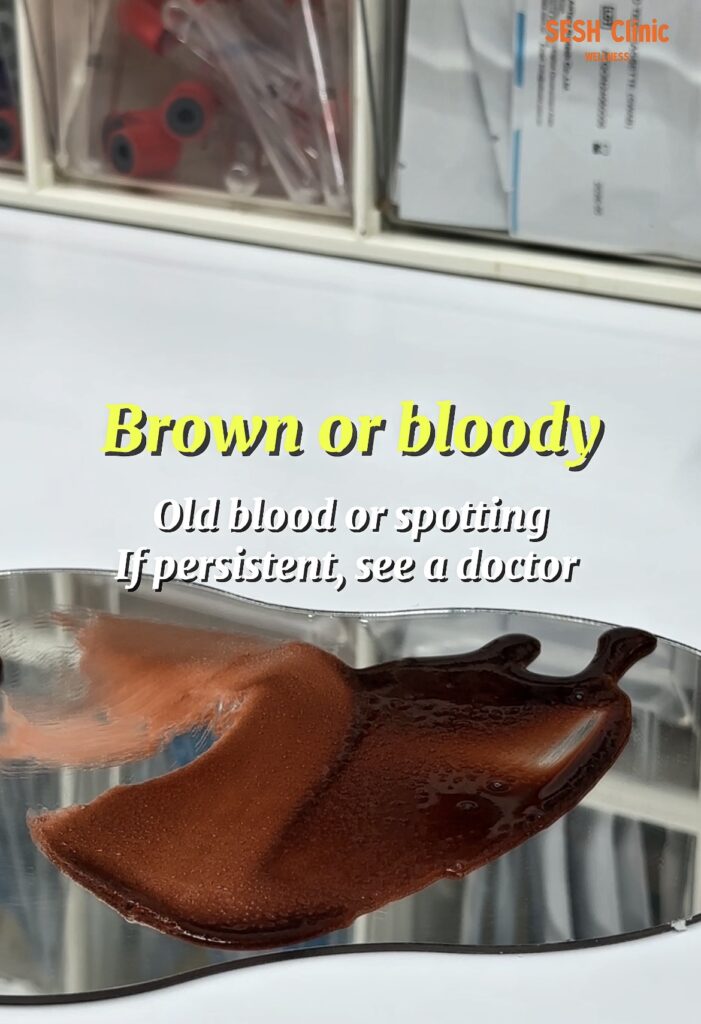
Brown or Bloody Discharge — Old Blood or Spotting
Brown discharge usually means old blood leaving the body, often seen before or after your period.
It may also occur after:
- Intense workouts
- Stress
- Recent sexual activity
What to do: If spotting persists or occurs mid-cycle, consult your doctor to rule out hormonal imbalance or cervical conditions.
👉 Brown discharge after sex might also indicate mild cervical irritation.
Pink or Red Discharge — Fresh Blood or Irritation
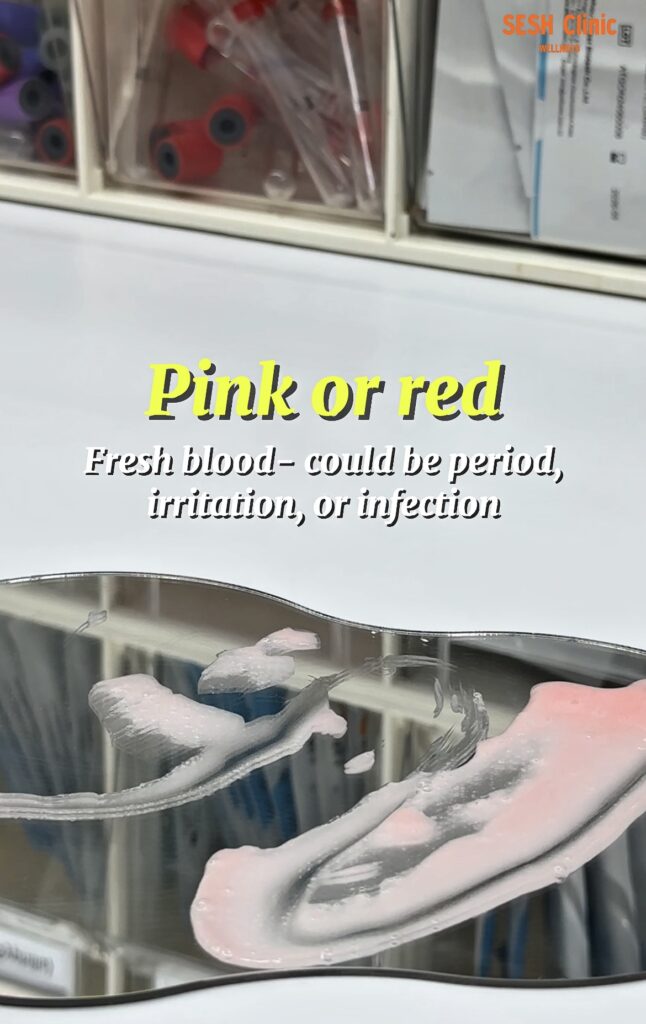
Pink discharge is often linked to:
- The start or end of your period
- Light bleeding after sex (cervical irritation)
- Early pregnancy (implantation bleeding)
Seek medical advice if: Discharge occurs unexpectedly or has a strong odor — could suggest infection or inflammation.
For more details, visit the – Vaginal Discharge Guide.
Frothy & Green Discharge — Possible Trichomonas (STI)
A frothy, greenish, foul-smelling discharge often points to trichomoniasis, a sexually transmitted infection (STI).

Other symptoms may include:
- Itching or irritation
- Pain during urination or intercourse
⚠️ Needs treatment! Trichomonas requires antibiotics prescribed by a clinician. Ensure your partner is also tested and treated.
Learn more at the CDC’s Trichomoniasis page.
Yellow/Green & Thick Discharge — Possible Bacterial or STI Indicator

Thick yellow or green discharge with a fishy or foul odor may signal:
- Bacterial Vaginosis (BV)
- Gonorrhea or Chlamydia
⚠️ These infections require immediate medical attention — untreated, they can affect fertility and reproductive health.
Watery & Light Yellow Discharge — Often Normal
Thin, watery discharge is often normal, especially during exercise, ovulation, or arousal. Slight yellow tint may appear from air exposure.

Normal: Odorless and light
⚠️ Check-up advised: If itching, odor, or discomfort develops.
When to See a Doctor If You’re Wondering “Is My Discharge Normal?”
See a healthcare provider if you notice:
- Foul, fishy, or strong odor
- Itching, burning, or irritation
- Green, gray, or bloody discharge (not period-related)
- Pelvic pain or fever
- Symptoms persisting after OTC treatments
Pro Tip: Keep a cycle and discharge journal — it helps your doctor identify patterns and hormonal shifts.
How to Keep Your Vaginal Health in Balance
Do’s
✅ Wear breathable cotton underwear.
✅ Stay hydrated to support natural lubrication.
✅ Eat probiotic-rich foods (like yogurt or kefir).
✅ Practice safe sex with protection.
Don’ts
🚫 Avoid scented soaps, sprays, or douches — they disrupt your natural pH.
🚫 Don’t ignore persistent itching or irritation.
📖 Check out our internal post: “Understanding Your Menstrual Cycle”
If you ever feel unsure whether your discharge is normal, talk to a women’s health professional.
m,mkl